Thursday, November 15, 2012

3rd Grade Aboriginal Handprints


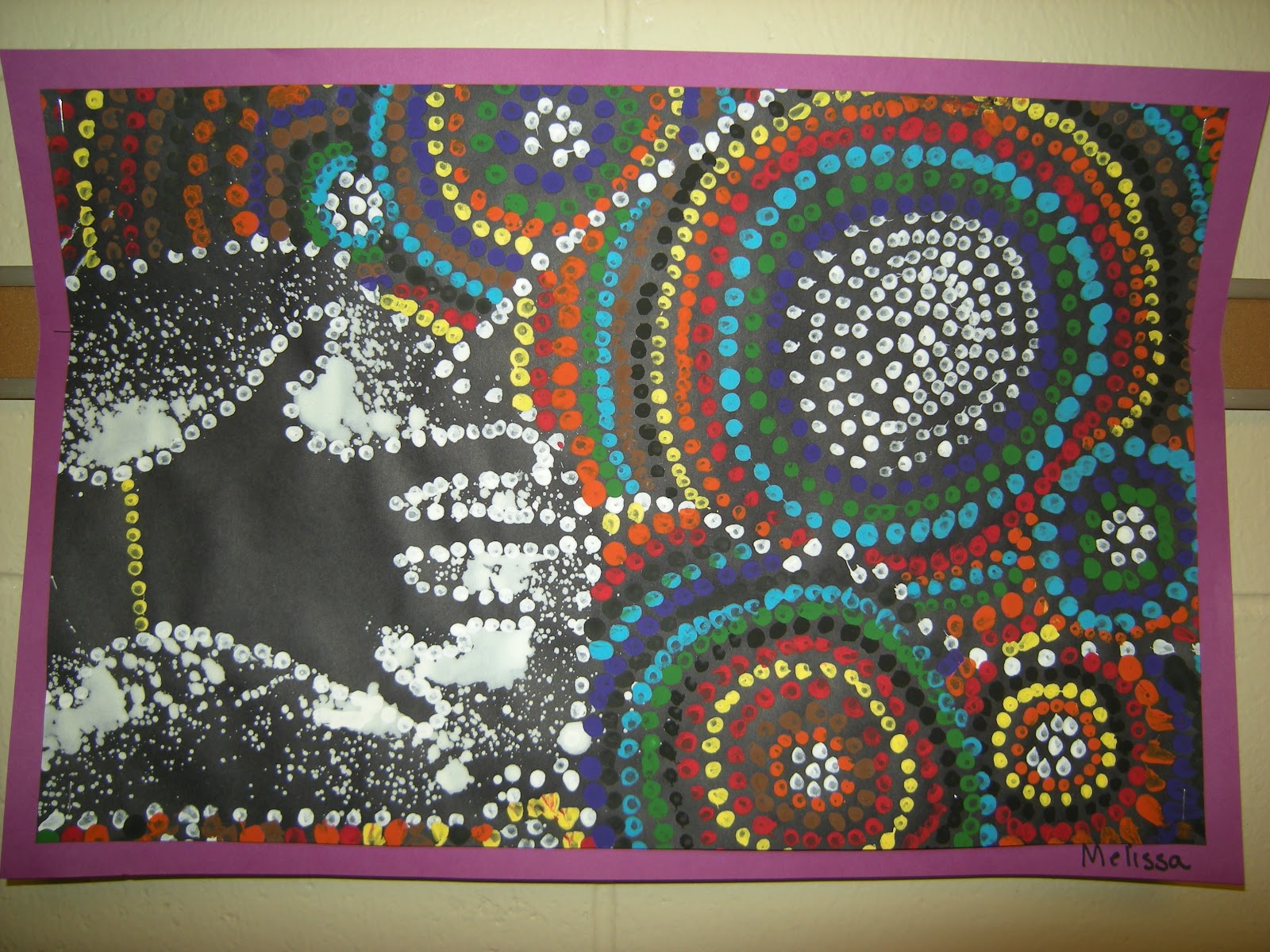
The 3rd  grade students were able to combine the old and modern Aboriginal Art into one piece of Art.  Students were able to add their handprint (which originates from the cave art of Australia) and then fill their space with dots/symbols (which is from Modern Australian Art).  Students also learned about the warm/cool colors and had to choose one color group for their art.  Aboriginal art originates from Australia over 30,000 years ago.  Aborigines began painting on rocks and inside caves with earth tone or neutral colors.  Students learned that back then they couldn’t go to the store to buy paint; they had to find things in nature to make their own paint.  Today Aboriginal Art has three main characteristics, dots, symbols and/or animals.  Aborigines filled their space and did not leave any negative (empty space) in their art.  The Aborigines used symbols in their art to document their travels and experiences.  Students learned that different countries/cultures have different meanings for different symbols.   Students were also introduced to REPITION and UNITY and how to create/find that in a piece of art.


2nd Grade Aboriginal Portraits


Aboriginal art originates from Australia over 30,000 years ago.  Aborigines began painting on rocks and inside caves with earth tone or neutral colors.  Students learned that back then they couldn’t go to the store to buy paint; they had to find things in nature to make their own paint.  Today Aboriginal Art has three main characteristics, dots, symbols and/or animals.  Aborigines filled their space and did not leave any negative (empty space) in their art.  The Aborigines used symbols in their art to document their travels and experiences.  Students learned that different countries/cultures have different meanings for different symbols.   Students were also introduced to REPITION and UNITY and how to create/find that in a piece of art.

The 2nd grade students were able to learn what a portrait is, and they each created their own Aboriginal Portrait using various lines, colors and dots.  Students also learned what symmetry is and created symmetry in their portrait.


1st Grade Rainsticks


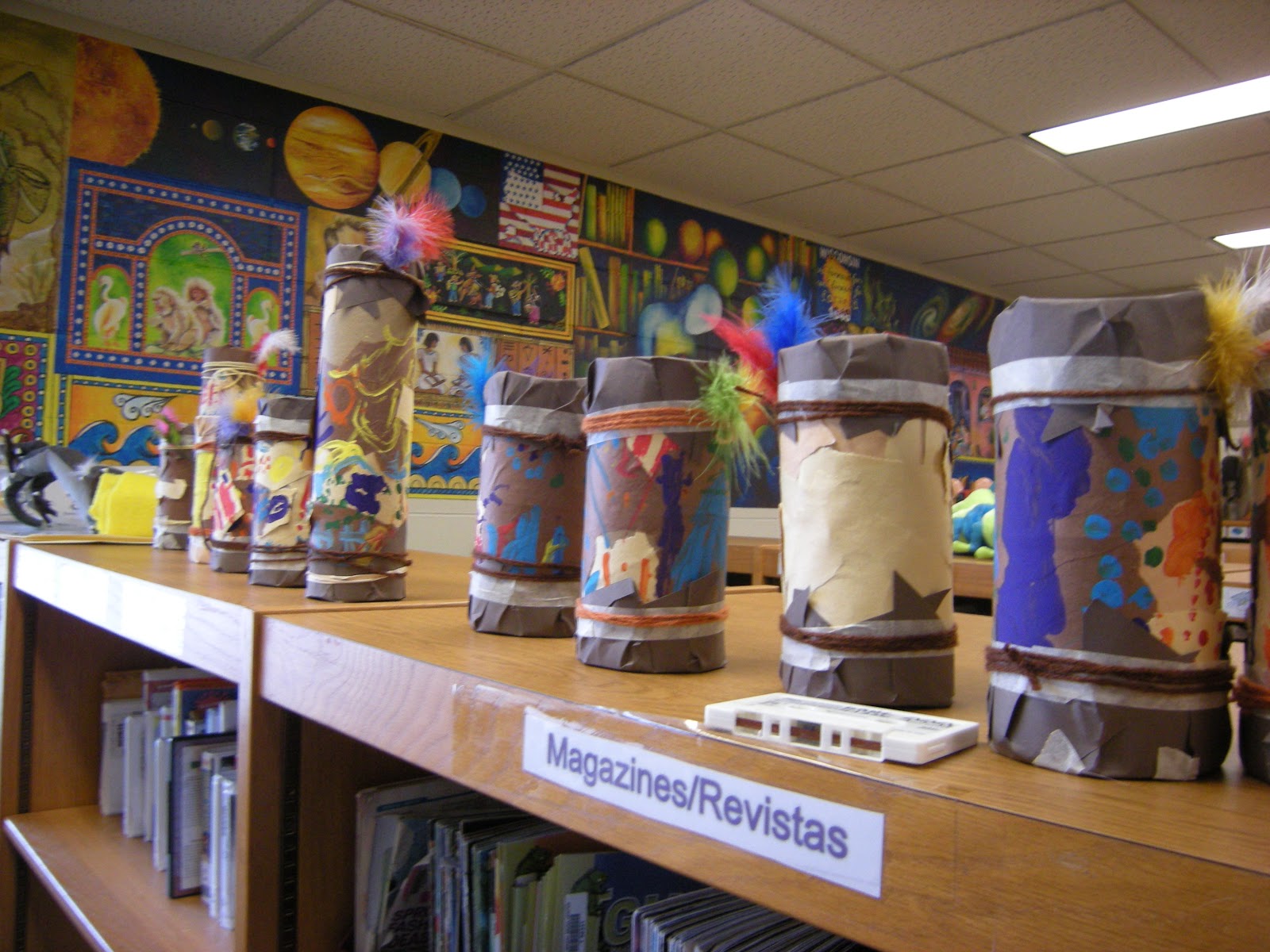
Aboriginal art originates from Australia over 30,000 years ago.  Aborigines began painting on rocks and inside caves with earth tone or neutral colors.  Students learned that back then they couldn’t go to the store to buy paint; they had to find things in nature to make their own paint.  Today Aboriginal Art has three main characteristics, dots, symbols and/or animals.  Aborigines filled their space and did not leave any negative (empty space) in their art.  The Aborigines used symbols in their art to document their travels and experiences.  Students learned that different countries/cultures have different meanings for different symbols.   Students were also introduced to REPITION and UNITY and how to create/find that in a piece of art. The 1st grade students learned about rain sticks and what they were used for.  Each student was able to create their own rain stick, painting it with Aboriginal dots and symbols.


Chihuly School Wide Collaboration Project

Each year I like to kick off the school year with school wide collaboration project so showcase teamwork and a piece of art on a large scale.  This year students studied and learned about glass artist Dale Chihuly.  We saw various examples of his work, a video on his process and also learned about what a "macchia" is.  Each student created their own individual macchia and they were attached together to create a large sculpture.  The 5th grade students were able to make the connection on their annual field trip to UWGB and got to see an actual Chihuly Chandiler hanging in the Weidner Center.  They were all pretty amazed at how cool an actual Chihuly Sculpture looks in person.


Monday, October 29, 2012

Klee Self Portraits


The 5th grade students watched a video showing many different examples of Paul Klee’s art work.  Students had to write at least five descriptive words that came to their mind when view Klee’s work.  Here are some of the words they wrote: colorful, shapes, lines, weird, crazy, people, creative, imaginative, and pattern.  After seeing the video students were able to learn about the proportions of the face and had to draw their own self portrait.  We overlapped many different shapes and colors to make it look like the style of Paul Klee’s work.  Finally students had to write an acrostic name poem in the boarder of their self-portrait.


Picasso Monsters


The 4th grade students learned about the artist Pablo Picasso through a power point.  Picasso was born in Spain and has become one of the world’s most famous artists.  The students were able to see the progression of his different styles of art.  The Blue Period was a time that was depressing and sad for Picasso.  He showed this through painting his artwork in all different shades of blue.  His next period was called the Rose Period.   He used more bright and cheerful colors.  This was a more happy time in Picasso’s life because he was involved in a relationship with his future wife.  The period that Picasso is most famous for is CUBISM.  Cubism is using various shapes to create multiple viewpoints.  Picasso love to use people as his subject matter.  The 4th grade students created abstract monster faces using multiple patterns in the cubism style that Picasso was so famous for.
(Thanks Mr. E for the great lesson idea)


Van Gogh Pumpkin Patch


The 3rd grade students learned about the artist Vincent Van Gogh through a video that showed a little girl interviewing Van Gogh.  We also read the book, The Man with the Yellow House.   We looked at Van Gogh’s artwork and talked about how he expressed his feelings through his art.  We discussed how different colors create different moods or feelings in a painting. Van Gogh used an impasto  technique, which is short, thick brushstrokes.  Students replicated Van Gogh’s style by using short, wavy lines to create their sky.  The students were able to use the cool colors to create their very own
“Starry Night.”


Indian Corn


The 1st Grade students learned about the importance of corn in our society.  They learned that corn is the number one crop in America.  We read the book, Corn By Gail Gibbons.  In this book students learned there are many different types of corn and many uses for corn. Corn is used in many foods such as candy, soda, and cereal.  Corn is also used in glue, paint and soap.  Students also learned that the Indians were the first people to grow corn and that is where “Indian Corn” gets its name.  Students were able to use lines, pattern and texture to create their own Indian Corn.


2nd Grade Fall Tree Sculptures


 The 2nd grade students were able to learn about the different changes that a tree goes through throughout the year from the book, Sky Tree.  We discussed each of the four seasons and what the leaves and tree look like in each of the four seasons.  The students also learned about what a sculpture is and how it is different from a painting or drawing.  The students were able to create a tree sculpture out of a paper bag.  The students learned what the three warm colors are and could choose which warm colors to use for the leaves of their tree.